
The full hardware and software framework for Edge-IoT Smart Meters
Built on Phoenix-RTOS, Phoenix-METER enables you to develop smart meters with edge processing. Optimize design and run core metrology, software-defined PLC (PRIME 1.4 / G3-PLC), and edge applications on a single MCU
Features
Complete System Framework
Complete software and hardware development framework facilitating the development of next-generation smart energy meters.
Turnkey Reference Designs
Reference 1-phase and 3-phase meter designs with PLC (PRIME, G3-PLC) and wireless (wM-Bus, IEEE 802.15.4) communication, featuring a USB interface for external devices (4G, 5G, WiFi).
OS-Driven Architecture
Software-defined modular architecture based on the Phoenix-RTOS operating system.
Process Separation
Resource separation using memory protection unit and secure message passing, allowing legally relevant metrology software and legally irrelevant parts to be combined concurrently on the same hardware.
Broad AFE Compatibility
Support for multiple industry-standard Analog Frontends, including TI AFE031, TI AFE032, NJM45001, and ATPL220A.
Integrated uDCU Capability
Full support for PRIME Base Node gateways, enabling the execution of comprehensive Data Concentrator Unit (DCU) functionality directly on a regular energy meter.
Polyglot Edge Runtime
Advanced execution environment for running additional edge computing applications supporting C/C++ and Lua.
Production Blueprints
Complete hardware design packages including comprehensive schematics
and optimized PCB layouts.
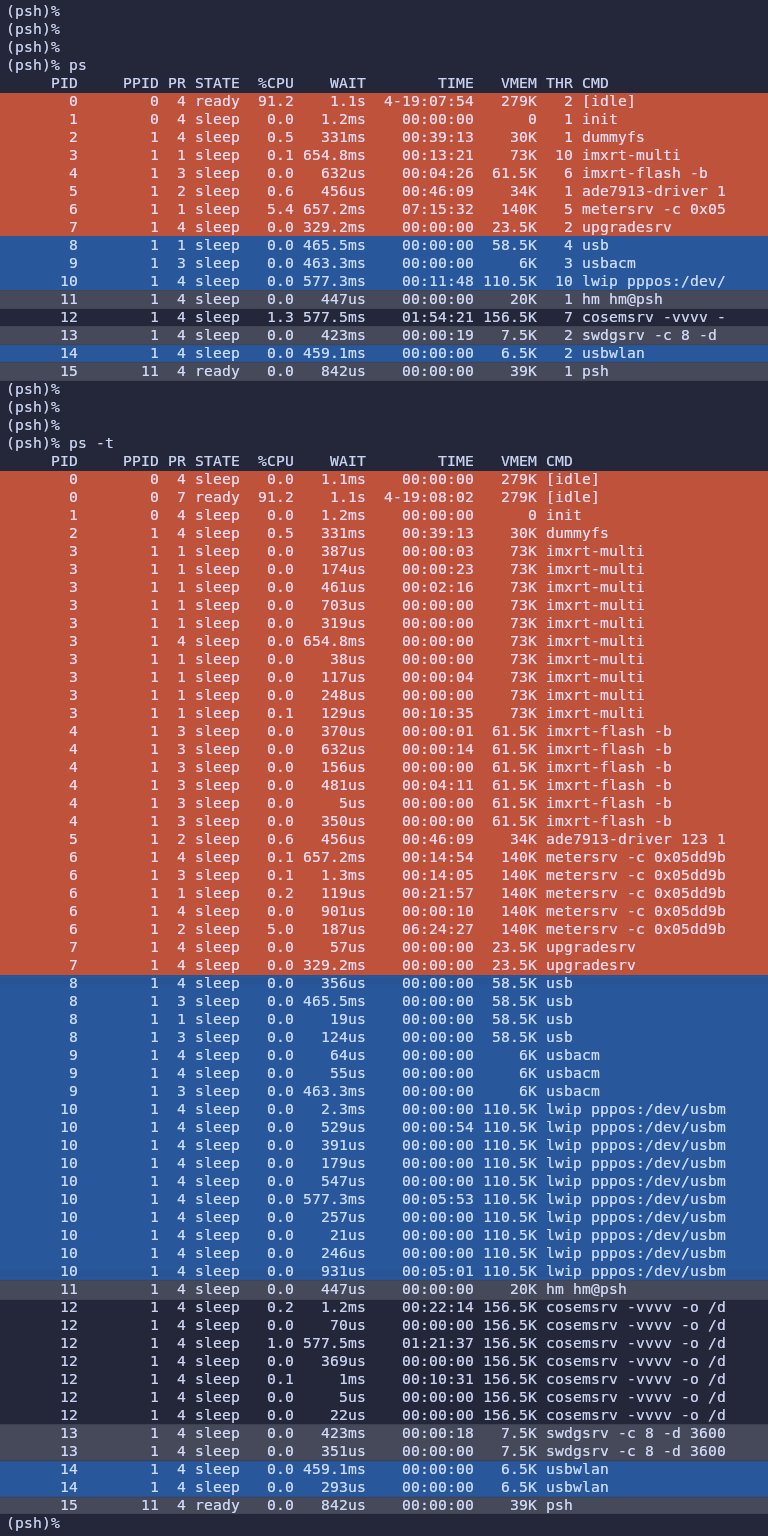
List of processes and threads presented on the meter console
Edge-based energy management
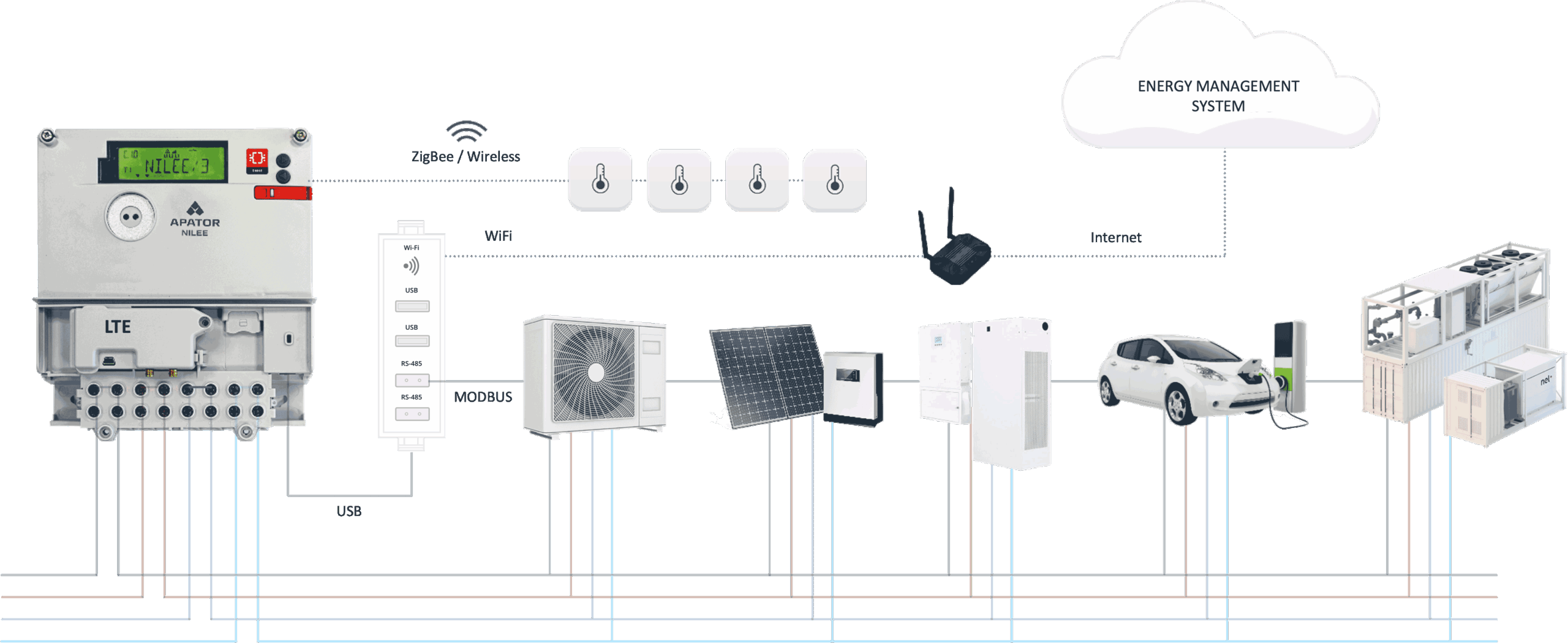
Energy Management via Smart Meters
The energy meter functions as an advanced, OS-driven Edge-IoT device. This architecture allows the execution of custom edge applications integrated with upstream energy management platforms and downstream local hardware devices, strictly adhering to their specific control logic and physical communication interfaces.
Edge applications executed directly on the meter have full access to measurement streams – including high-granular current and voltage waveform samples. This unlocks the ability to deploy complex, custom edge-AI algorithms.
Production-Ready Edge Use Cases
NIALM (Non-Intrusive Appliance Load Monitoring): Real-time disaggregation of consumption profiles to non-invasively monitor individual appliance loads from a single metering point.
Dynamic HVAC Optimization: Automated control of local heat pumps, modulating operations „in sync” with localized green energy availability.
Community Flexibility Storage: Smart orchestrating of local battery banks and home energy storage systems to match the balancing needs of the wider energy community or microgrid.
The three architecture pillars
Pillar 1: Powered by Phoenix-RTOS
Driven by a scalable, real-time operating system with a microkernel architecture.
Separation using hardware memory protection and message passing between metrology, communication stacks, and applications.
Secure multitasking running over 15
processes and 50 threads concurrently while
consuming as little as 2MB of RAM.
Pillar 2: Edge Intelligence
Safely deploy, update, and swap independent edge applications remotely directly on the installed meter.
Natively manages and communicates in real-time with on-site infrastructure: heat pumps, energy storage, EV chargers, and PV inverters.
Executes localized machine learning algorithms at the edge to balance supply and demand profiles.
Pillar 3: Hardware Reference Design
Hardware architecture based on a single multi-core MCU. Optimized for crossover, cost-effective microcontrollers (NXP i.MX RT series).
Eliminates external, expensive dedicated modem chips and metrology SoCs, lowering the Bill of Materials (BOM) cost.
Get complete, field-proven schematics and multi-layer PCB layouts ready to be deployed directly onto your assembly lines.
Components framework
Software
- Phoenix-RTOS: Core real-time operating system managing the underlying hardware.
- Metrology: Core measurement application layer.
- DLMS/COSEM Server: Industry-standard communication protocol layer.
- PLC Communication: Software-defined stacks for powerline networks.
- Networking: Full stack for field and cloud routing.
- Sample Docs & Apps: Ready-to-go templates to accelerate custom application development.
Hardware
- Reference Designs: Comprehensive hardware blueprints, evaluation boards, and Bill of Materials (BOM) for rapid prototyping.
- Full schematics: Turnkey 1-phase and 3-phase meter hardware reference designs.
- Test toolkit: Hardware and software utilities for testing and performance profiling.
- Certification tools: Built-in protocol analyzers and compliance test suites to streamline official hardware qualification.
Licensing & Source Access
Phoenix-METER is provided as a production-grade set of software packages and hardware projects tailored for seamless development of next generation meter. The framework is delivered under a straightforward commercial model based on three core components:

Source Code License
Provides your engineering team with 100% visibility and full access to the core framework codebase enabling you to freely develop, customize, port to new hardware, and perform independent zero-trust security or compliance audits.

Per-Device License
A scalable, volume-based production fee applied to each active unit deployed in the field.

Support Fee
An ongoing maintenance and technical support fee that guarantees your project continuous access to software updates, security patches, protocol revisions, and direct engineering backing from our team.
Technical details
| microcontroller: | NXP i.MX RT 106x, NXP i.MX RT 117x |
| operating system: | Phoenix-RTOS |
| implementation: | C language using POSIX API with minimal footprint |
| metrology: | software-defined, extensible 1-phase and 3-phase meter application, class C |
| PLC communication: | PRIME 1.3.6 CENELEC A, PRIME 1.4 CENELEC A/FCC, G3-PLC CENELEC A/FCC (all software-defined) |
| PLC diagnostics: | PLC spectrum analyzer, PLC sniffer with WireShark support |
| PLC advanced features: | multiple-channel support with dynamic band selection for optimal communication |
| wireless communication: | IEEE 802.15.4, wM-Bus, WiFi, 3GPP 3G/4G/5G |
| network protocols: | HTTP, SSH, Telnet, DLMS/COSEM, NTP, DHCP |
| network security: | 802.1x, IPSec, WiFi WPA2 |
| device interfaces: | USB host, UART, RS-485 |
Phoenix-METER based devices
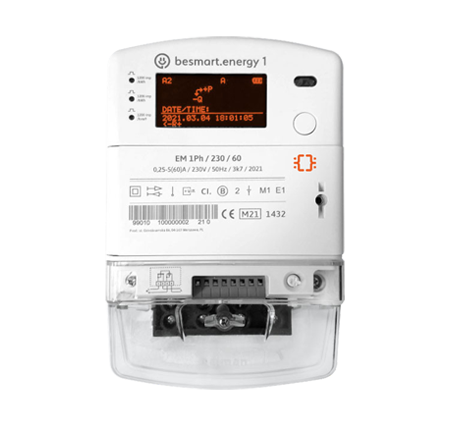
besmart.energy meter
Prototype of smart energy meter with Edge-IoT architecture, rich connectivity and exchangeable user applications executed directly on the meter (e.g. for cloud integration).
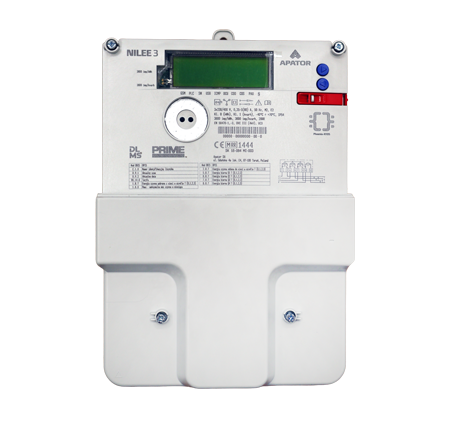
Apator NILEE
Smart energy meter with Edge-IoT architecture, rich connectivity and exchangeable user applications executed directly on the meter (e.g. for cloud integration).
Resources & Documentation
Phoenix-METER Product Brief – A high-level technical overview including deployment topology and hardware compatibility matrices.
Software Architecture Whitepaper – Deep-dive documentation on Phoenix-METER architecture targeting memory footprint and real-time aspects.
Hardware Architecture – Deep-dive documentation on Phoenix-METER hardware.
Software documentation – Technical manual detailing DLMS/COSEM meter object mapping, PLC stack etc.
Application Execution Environment – Technical manual discussing API and methods for developing edge applications.
Contact & Business Inquiry
Looking to build your new Edge-IoT meter on the Phoenix-METER framework? Get in touch directly with our team to discuss your project requirements.

Jacek L Madajczyk, PhD
Advisor to the Management Board
meter@phoenix-rtos.com