
The complete software for Smart Grid data concentrators
Easily create, customize, and deploy resilient DCU solutions—on dedicated hardware or a split cloud-edge architecture. Battle-tested across 60 000 substations gathering data from 3M+ meters via PRIME PLC.
Features
Field-Proven Deployment
Runs inside 3 commercial Phoenix-RTOS-based DCU platforms and successfully ported to 2 third-party commercial devices, entirely replacing their legacy software stacks.
Flexible Architecture
Supports standalone operation on dedicated DCU hardware, or a split configuration partitioned between cloud orchestration and edge-level smart meters to target islanded locations.
Certified, Software-Defined PLC Stack
Software-implemented communication stacks with native multi-channel support for both PRIME and G3-PLC protocols in CENELEC A and FCC bands.
Broad Hardware Interoperability
Integration with industry-standard Analog Front-Ends, including TI AFE031, TI AFE032, NJM45001, and ATPL220A.
Certification Toolkit
Built-in protocol primitives and compliance layers designed to streamline and accelerate official hardware qualification.
Multiple DLMS/COSEM models support
Highly modular architecture featuring simultaneous multi-model profile management for seamless multi-vendor meter environments.
Scalable HES interface
DCU can be scaled to support many HES protocols. Natively supports DCSAP.
Balancing meter
Balancing meter functionality to measure energy parameters directly on the substations.
Multiple OS support
DCU functionality can be run under Phoenix-RTOS or GNU/Linux supervision.
Phoenix-DCU Software
Phoenix-DCU Hardware
Inside the Platform
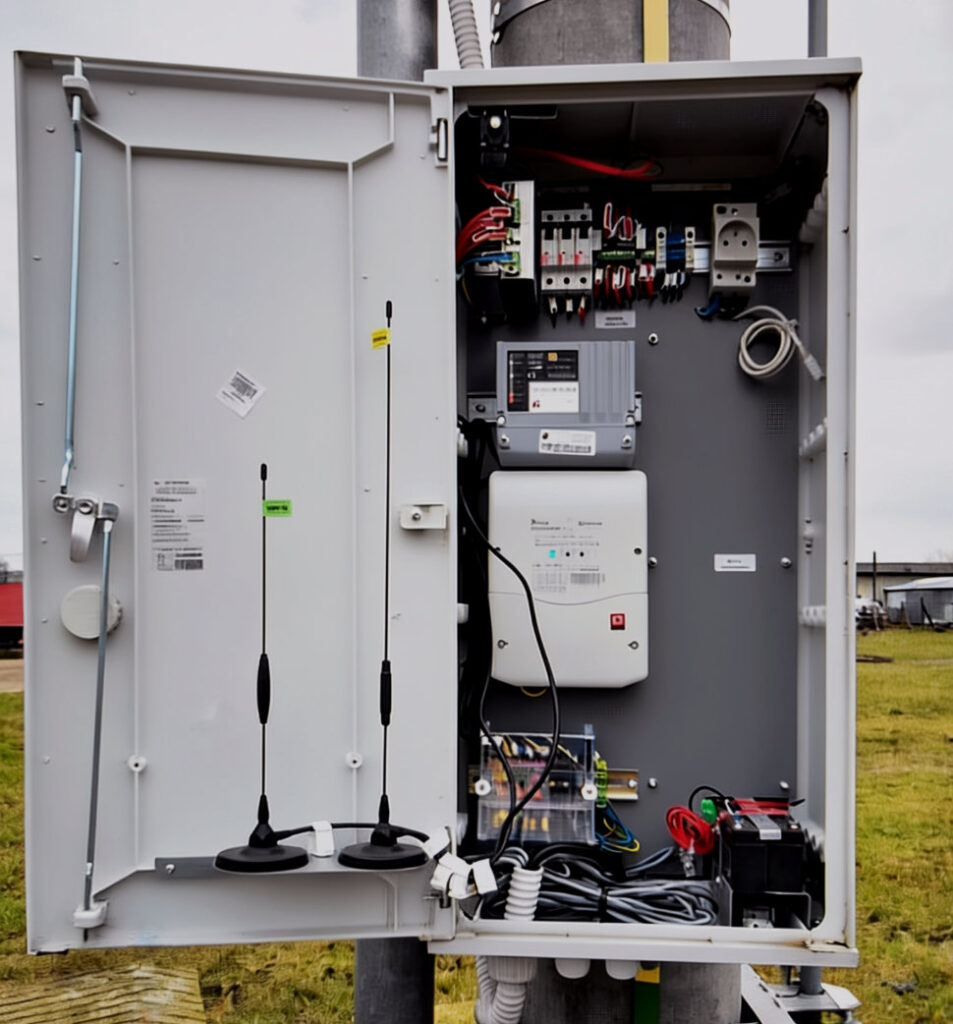
DCU Application
Collects data in parallel from up to 2,048 smart meters simultaneously, maintaining strict 15-minute granularity.
Software-Defined PLC Stack
Completely software-executed Physical (PHY) and Media Access Control (MAC) layers driven by Phoenix-RTOS deterministic real-time scheduling.
Metrology
Balancing meter module with comprehensive DLMS/COSEM register set, running entirely within an isolated user-space process for system stability.
Advanced GUI
A web interface providing deep grid visibility—combining high-level substation data aggregation with granular, per-meter connection state.
Certification Toolkit
Substation-level digital signal processing with an integrated PLC spectrum analyzer for real-time noise and interference detection and pinpointing.
Security Suite
Edge protection featuring native 802.1x, IPSec, TLS, OpenVPN, Wi-Fi WPA2, and automated device certificate lifecycle management.
Architecture
Phoenix-DCU features a highly modular, decoupled architecture where critical system components run as isolated user-space applications under POSIX compliance.

Key Architectural Highlights
- Modularity: software is implemented as a set of components communicating using message passing
- Software-defined architecture: key components implemented as software modules running under the Phoenix-RTOS operating system.
- Resource efficiency: Fully operational on cost-effective hardware, requiring just 128 MB RAM.
- Hardware abstraction: Optimized for ARMv7 Cortex-A7 and compatible silicon architectures.
Licensing & Source Access
Phoenix-DCU is provided as a production-grade set of software packages tailored for seamless deployment under either the Phoenix-RTOS microkernel or monolithic GNU/Linux. The framework is delivered under a straightforward commercial model based on three core components.

Source Code License
Provides your engineering team with 100% visibility and full access to the core framework codebase, software packages, and SDK tools enabling you to freely develop, customize, port to new hardware, and perform independent zero-trust security or compliance audits.

Per-Device License
A scalable, volume-based production fee applied to each active unit deployed in the field. This covers both dedicated standalone hardware DCUs and individual smart meters transformed into active data concentrators.

Support Fee
An ongoing maintenance and technical support fee that guarantees your project continuous access to software updates, security patches, protocol revisions, and direct engineering backing from our core architecture team.
Technical details
| meter data gathering: | automatic meter readout with caching |
| meters limit: | 2048 |
| meter communication: | DLMS/COSEM client with security support |
| meter firmware upgrade: | unicast and broadcast support |
| meter data storage: | SQL database for meter data |
| network protocols: | HTTP/HTTPS TLS 1.2, SSH, Telnet, DCSAP, NTP, DHCP, SNMP |
| network security: | 802.1x, IPSec, OpenVPN, Wi-Fi WPA2, device certificate management |
| metrology: | software-defined, extensible 3-phase meter application |
| metrology class: | C |
| PLC communication: | PRIME 1.3.6 CENELEC A, PRIME 1.4 BC CENELEC A, PRIME 1.4 FCC, G3-PLC CENELEC A/FCC (all software-defined) |
| PLC diagnostics: | PLC spectrum analyser, PLC sniffer with WireShark support |
| PLC advanced features: | multiple-channel support with dynamic band selection for optimal communication |
| implementation: | C language using POSIX API with minimal footprint |
| implementation platform: | Phoenix-RTOS, GNU/Linux |
Field Hardware Gallery
Real-world commercial hardware configurations powered by the Phoenix-DCU software platform:
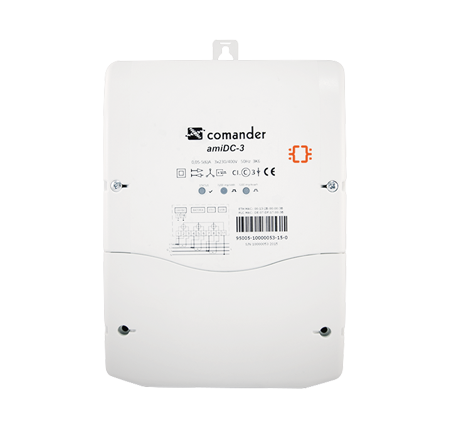
ANDRA amiDC-3
First generation of grid concentrator running Phoenix-DCU natively on ARMv7 Cortex-A7 silicon with integrated TI AFE031 power-line transceiver, supporting PRIME 1.3.6, gathering data from: 1M meters
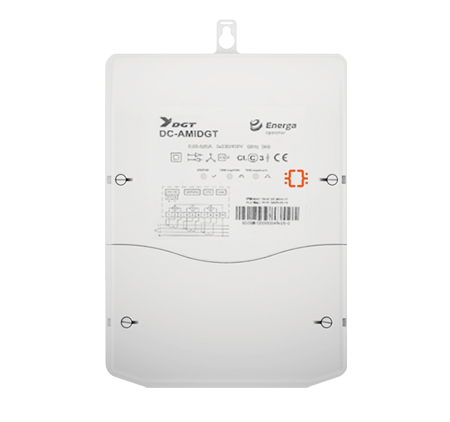
Energa DC-AMIDGT
Second generation of Phoenix-DCU and hardware, supporting PRIME 1.3.6 and gathering data from 1M meters
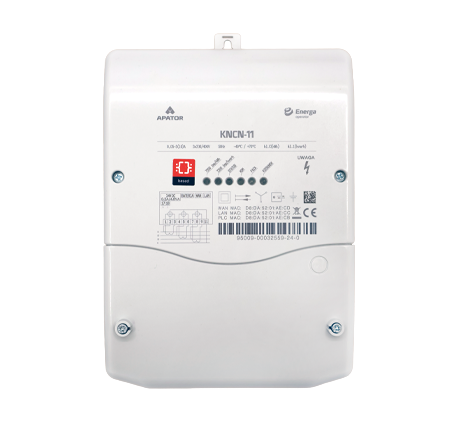
Apator KNCN-11
Hardened edge data concentrator certified for high-density grid monitoring and automated DLMS/COSEM
multi-vendor meter profile orchestration, supporting PRIME 1.4, gathering data from over 1M meters
Resources & Documentation
Phoenix-DCU Product Brief – A high-level technical overview including deployment topology and hardware compatibility matrices.
Architecture Whitepaper – Deep-dive documentation on Phoenix-DCU architecture targeting memory footprint and real-time aspects.
Hardware Integration – A comprehensive guide covering setup, interfacing with industry-standard Analog Front-Ends, and hardware qualification procedures.
Software Documentation – Technical manual detailing DLMS/COSEM meter object mapping, SQL caching schemas, and HES uplink integration.
Contact & Business Inquiry
Are you planning a high-density Smart Grid deployment, looking to certify new DCU hardware layouts, or requesting an evaluation package? Get in touch directly with our commercial and licensing team to discuss your
project requirements.

Jacek L Madajczyk, PhD
Advisor to the Management Board
dcu@phoenix-rtos.com